

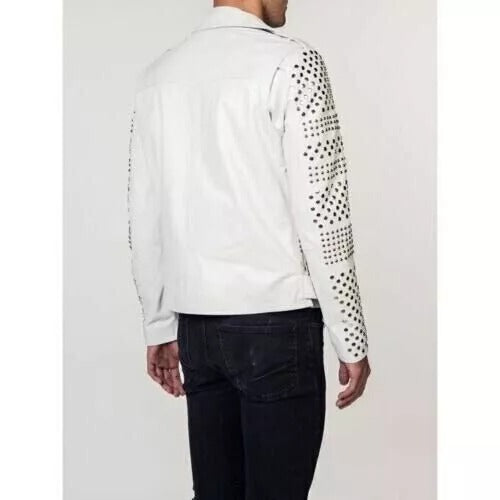
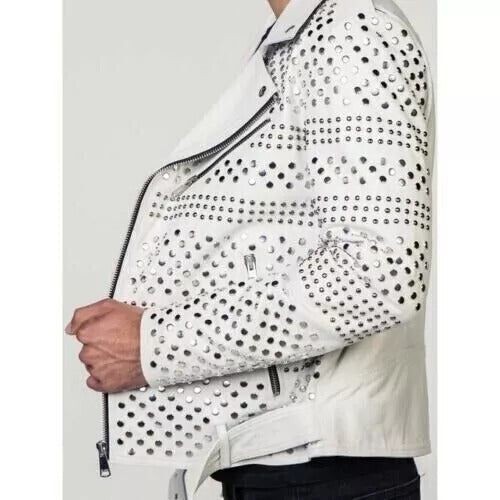


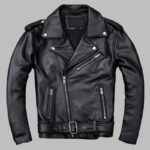
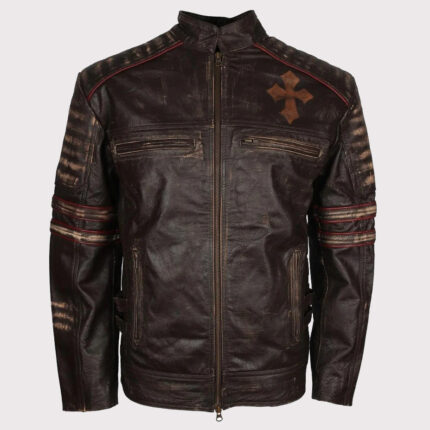
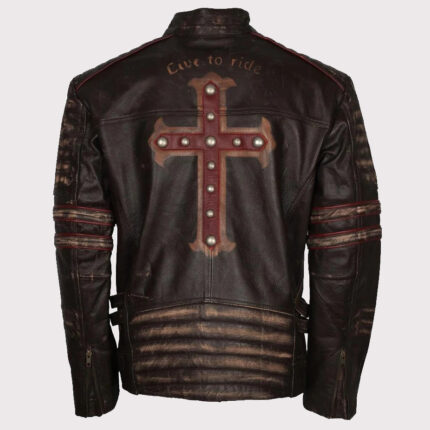
Men Leather White Jacket – Punk Studded Motorcycle Genuine Cowhide Leather Jacket
Description
Okay, let’s tackle this. The user wants me to format the product description for WooCommerce using specific HTML tags. First, I need to make sure I understand the source content. The product is a men’s white leather jacket made from genuine cowhide with punk studded details.
The rules say to use only
,
,
,
- , , and tags. No markdown, no
tags. I need to keep the content faithful to the source and not add any specs that aren’t there. Also, if the content supports structure, use headings and bullet points.
Looking at the source description, the first paragraph introduces the product, mentions the leather quality, and the punk studs. The second paragraph talks about functionality like the full-zip front and pockets. The third part seems cut off but mentions adjustable strap cuffs.
I should start by creating a heading for the product name. The original has the product name in a
with bold text. Since we can use
, maybe make the product name an
for better structure. Wait, the user says to return only the description section, so maybe the product name isn’t part of the description. The source description starts with the product name in a
tag. The user’s instruction says to return only the HTML for the description section. So perhaps the product name in the source is part of the description, but in the output, we need to format it properly.
Wait, the source description starts with a paragraph that includes the product name and ID. The user’s instruction says to return only the HTML for the description section. So I need to process that first paragraph. Let me check the rules again. Rule 3 says to keep content faithful to the source. The source’s first paragraph has the product name and ID. The user’s example shows that the product name is in bold. Since we can’t use markdown, but can use , maybe replace **bold** with where necessary.
The first paragraph mentions the leather’s qualities: buttery-soft, durable, breathable, timeless silhouette, patina. The second paragraph talks about the design elements: studs on collar, shoulders, cuffs, edgy look. The third paragraph starts with function meets fashion, listing features like full-zip, snap-button closures, interior pockets, adjustable cuffs. The original third paragraph is cut off, but maybe the user expects me to include what’s there.
I need to structure this into paragraphs and bullet points where appropriate. The second paragraph could be a
with for key terms. The third paragraph starts with “Function meets fashion…” which could be a heading
, followed by bullet points for the features. Let me check the rules again: if the content supports structure, use headings and bullets. So yes, using
for “Function Meets Fashion” and then a
with
- for each feature.
Wait, the original third paragraph is incomplete. The user’s source description ends with “Adjustable strap cuffs and a”. Since it’s cut off, I shouldn’t add anything beyond that. So maybe the third paragraph is just a partial sentence. But in the source, the user provided that as part of the description. So I need to include what’s there, even if incomplete. However, the user says to keep content faithful to the source. So I’ll include the partial sentence as is, but maybe adjust the structure.
Putting it all together:
Start with a
for the product name and ID. Then a
about the leather quality. Then an
for “Function Meets Fashion”, followed by a
with the features listed. The third paragraph’s partial sentence can be part of the
as a bullet point, even if it’s incomplete. Wait, the original third paragraph starts with “Function meets fashion with a full-zip front…” and then lists features. The user’s source has that as a paragraph, but the instruction says to use structure if possible. So converting that into a heading and bullet points would make sense.
So the structure would be:
–
for product name and ID
–
about leather and design
–
Function Meets Fashion
–
with bullet points for each feature (full-zip, snap closures, pockets, adjustable cuffs)
– Then the last part about the patina in another
?
Wait, the original second paragraph ends with “developing a unique patina that only true leather can provide.” So that’s part of the first
. Then the third paragraph starts with “Function meets fashion…” which is a new section. The original third paragraph is cut off, but in the user’s source, it’s written as “adjustable strap cuffs and a”. So maybe the user intended that to be a bullet point. Since it’s incomplete, perhaps we can include it as is, but maybe the user made a mistake. However, per the rules, we have to be faithful to the source. So the third paragraph is: “Function meets fashion with a full-zip front, reinforced snap-button closures, and multiple interior pockets for secure storage of essentials. Adjustable strap cuffs and a”. So the last sentence is cut off. Since we can’t add anything, we have to include it as is. But that would leave an incomplete thought. However, since the user provided that, we have to include it. So in the HTML, the third paragraph would be a
with that text. But maybe combining with the bullet points.
Wait, the original third paragraph starts with “Function meets fashion…” and then lists features. So perhaps that’s a good candidate for a heading and bullet points. Let me re-express that.
tags. I need to keep the content faithful to the source and not add any specs that aren’t there. Also, if the content supports structure, use headings and bullet points.
Looking at the source description, the first paragraph introduces the product, mentions the leather quality, and the punk studs. The second paragraph talks about functionality like the full-zip front and pockets. The third part seems cut off but mentions adjustable strap cuffs.
I should start by creating a heading for the product name. The original has the product name in a
with bold text. Since we can use
, maybe make the product name an
for better structure. Wait, the user says to return only the description section, so maybe the product name isn’t part of the description. The source description starts with the product name in a
tag. The user’s instruction says to return only the HTML for the description section. So perhaps the product name in the source is part of the description, but in the output, we need to format it properly.
Wait, the source description starts with a paragraph that includes the product name and ID. The user’s instruction says to return only the HTML for the description section. So I need to process that first paragraph. Let me check the rules again. Rule 3 says to keep content faithful to the source. The source’s first paragraph has the product name and ID. The user’s example shows that the product name is in bold. Since we can’t use markdown, but can use , maybe replace **bold** with where necessary.
The first paragraph mentions the leather’s qualities: buttery-soft, durable, breathable, timeless silhouette, patina. The second paragraph talks about the design elements: studs on collar, shoulders, cuffs, edgy look. The third paragraph starts with function meets fashion, listing features like full-zip, snap-button closures, interior pockets, adjustable cuffs. The original third paragraph is cut off, but maybe the user expects me to include what’s there.
I need to structure this into paragraphs and bullet points where appropriate. The second paragraph could be a
with for key terms. The third paragraph starts with “Function meets fashion…” which could be a heading
, followed by bullet points for the features. Let me check the rules again: if the content supports structure, use headings and bullets. So yes, using
for “Function Meets Fashion” and then a
with
- for each feature.
Wait, the original third paragraph is incomplete. The user’s source description ends with “Adjustable strap cuffs and a”. Since it’s cut off, I shouldn’t add anything beyond that. So maybe the third paragraph is just a partial sentence. But in the source, the user provided that as part of the description. So I need to include what’s there, even if incomplete. However, the user says to keep content faithful to the source. So I’ll include the partial sentence as is, but maybe adjust the structure.
Putting it all together:
Start with a
for the product name and ID. Then a
about the leather quality. Then an
for “Function Meets Fashion”, followed by a
with the features listed. The third paragraph’s partial sentence can be part of the
as a bullet point, even if it’s incomplete. Wait, the original third paragraph starts with “Function meets fashion with a full-zip front…” and then lists features. The user’s source has that as a paragraph, but the instruction says to use structure if possible. So converting that into a heading and bullet points would make sense.
So the structure would be:
–
for product name and ID
–
about leather and design
–
Function Meets Fashion
–
with bullet points for each feature (full-zip, snap closures, pockets, adjustable cuffs)
– Then the last part about the patina in another
?
Wait, the original second paragraph ends with “developing a unique patina that only true leather can provide.” So that’s part of the first
. Then the third paragraph starts with “Function meets fashion…” which is a new section. The original third paragraph is cut off, but in the user’s source, it’s written as “adjustable strap cuffs and a”. So maybe the user intended that to be a bullet point. Since it’s incomplete, perhaps we can include it as is, but maybe the user made a mistake. However, per the rules, we have to be faithful to the source. So the third paragraph is: “Function meets fashion with a full-zip front, reinforced snap-button closures, and multiple interior pockets for secure storage of essentials. Adjustable strap cuffs and a”. So the last sentence is cut off. Since we can’t add anything, we have to include it as is. But that would leave an incomplete thought. However, since the user provided that, we have to include it. So in the HTML, the third paragraph would be a
with that text. But maybe combining with the bullet points.
Wait, the original third paragraph starts with “Function meets fashion…” and then lists features. So perhaps that’s a good candidate for a heading and bullet points. Let me re-express that.
- with
- for each feature.
Wait, the original third paragraph is incomplete. The user’s source description ends with “Adjustable strap cuffs and a”. Since it’s cut off, I shouldn’t add anything beyond that. So maybe the third paragraph is just a partial sentence. But in the source, the user provided that as part of the description. So I need to include what’s there, even if incomplete. However, the user says to keep content faithful to the source. So I’ll include the partial sentence as is, but maybe adjust the structure.
Putting it all together:
Start with a
for the product name and ID. Then a
about the leather quality. Then an
for “Function Meets Fashion”, followed by a
- with the features listed. The third paragraph’s partial sentence can be part of the
- as a bullet point, even if it’s incomplete. Wait, the original third paragraph starts with “Function meets fashion with a full-zip front…” and then lists features. The user’s source has that as a paragraph, but the instruction says to use structure if possible. So converting that into a heading and bullet points would make sense.
So the structure would be:
–
for product name and ID
–about leather and design
–Function Meets Fashion
–- with bullet points for each feature (full-zip, snap closures, pockets, adjustable cuffs)
– Then the last part about the patina in another?
Wait, the original second paragraph ends with “developing a unique patina that only true leather can provide.” So that’s part of the first
. Then the third paragraph starts with “Function meets fashion…” which is a new section. The original third paragraph is cut off, but in the user’s source, it’s written as “adjustable strap cuffs and a”. So maybe the user intended that to be a bullet point. Since it’s incomplete, perhaps we can include it as is, but maybe the user made a mistake. However, per the rules, we have to be faithful to the source. So the third paragraph is: “Function meets fashion with a full-zip front, reinforced snap-button closures, and multiple interior pockets for secure storage of essentials. Adjustable strap cuffs and a”. So the last sentence is cut off. Since we can’t add anything, we have to include it as is. But that would leave an incomplete thought. However, since the user provided that, we have to include it. So in the HTML, the third paragraph would be a
with that text. But maybe combining with the bullet points.
Wait, the original third paragraph starts with “Function meets fashion…” and then lists features. So perhaps that’s a good candidate for a heading and bullet points. Let me re-express that.
Shipping & Returns
- Free standard shipping on all orders
- Dispatch within 3-7 business days
- Delivery time: 10-15 business days
- Easy 7-day return policy
- Items must be unused with original tags
Customization
- Custom sizing available on request
- Email the dimensions
- Inner lining customization on request
- Personalized fit support
- Prices may differ than regular product
- No return and refund on custom product
Related products


Reviews
There are no reviews yet.